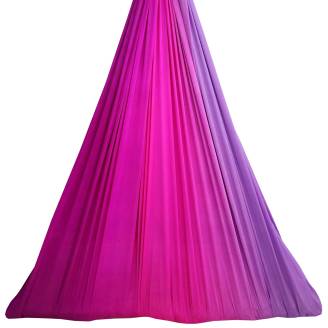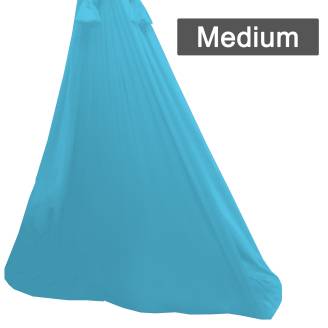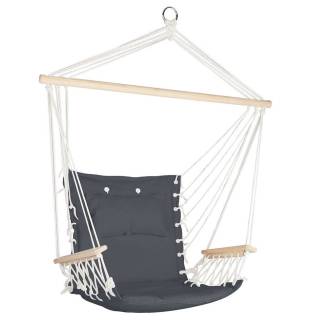


A sensory swing needs one thing before anything else: a hanging point that holds the weight and gives the swing room to move. This guide covers the four ways our customers hang them, a ceiling anchor plate, a beam, a tree limb with tree straps, and a stand, with the capacities, heights and clearances from the product manuals. It applies to wrap swings, pod swings, nest swings, Cacoons and seat swings, and most of it applies to hammock chairs too.
Before You Start: Four Things to Check
- Weight. Every swing and every hanging product has its own rating, listed under Specifics on its product page. Where a swing hangs from a stand or a kit, the lower of the two limits applies. As a guide, pods are rated to 80kg, wraps to 90kg or 100kg, 100cm nests to 100kg, 150cm nests to 140kg and the Cacoon Single and Double to 200kg.
- Height off the floor. The manuals give a maximum of 35cm for the pod swing, 40cm for wrap swings, nest swings and hangouts, and 50cm for the oval seat swing. Choose a height that makes it easy to get on and off, while minimising fall risk.
- Clearance. Leave clear space around the swing in case somebody was to jump off, fall off or swing too strongly, and keep the area clear of toys and anything a child or swing could bump into.
- Surface. Hang the swing over grass, sand, wood chips or a mat rather than concrete or tiles.
Option 1: A Ceiling Anchor Plate
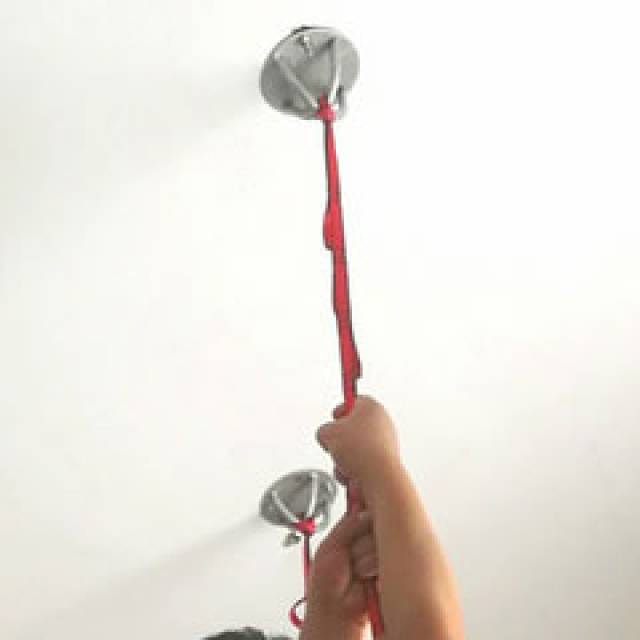
The ceiling anchor plate kit is the fixed option for a timber joist or beam, or a concrete or brick ceiling. It is rated to 100kg per kit, and the 12cm steel plate comes with four expansion bolts for concrete or brick, four wood screws for timber, a screw lock carabiner and a 110cm daisy chain strap with six loops so you can select the height at any time.
Fix the plate into the joist, beam, concrete or brick, never into plasterboard alone. The manual suggests professional installation, and gives three rules for a timber beam: check the beam is sound and strong enough, keep the plate away from the edge of the beam where a screw could split it (the 12cm plate wants a surface somewhat wider than that), and drill pilot holes before driving the screws. In concrete or brick you drill with a hammer drill, clean the dust out, tap the expansion bolts in and tighten the nuts to expand them.
The strap and plate take up about 120cm below the ceiling, so the manual gives this arithmetic for a ceiling height: a 160cm tall swing hung 30cm off the floor needs a hanging point no higher than about 310cm. A lower ceiling is fine, because you clip the carabiner to a different loop on the strap. Most standard 2.4m to 2.7m ceilings suit pod, wrap and 100cm nest swings.
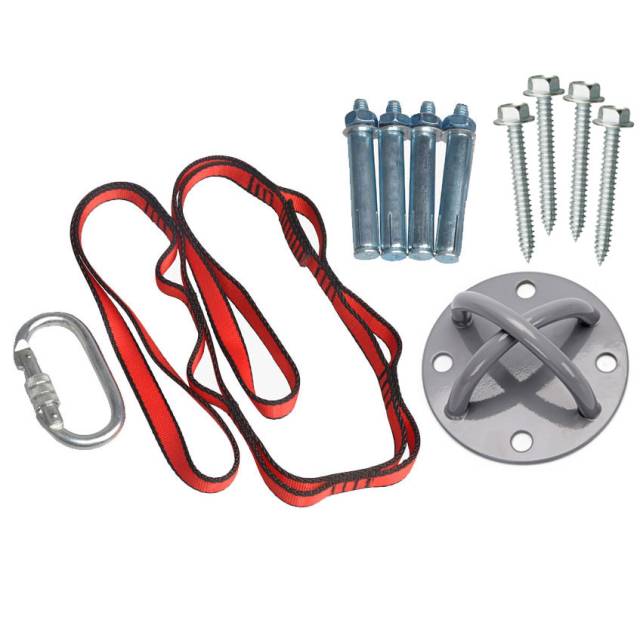
Pass the strap through the rings on the plate and back through itself, clip the carabiner to a loop, clip the swing on, then have an adult test the setup before a child uses it. Some nest swings and seat swings can hang from two points, using a pair of kits, one under each rope.
Option 2: A Beam or Tree Limb with Tree Straps
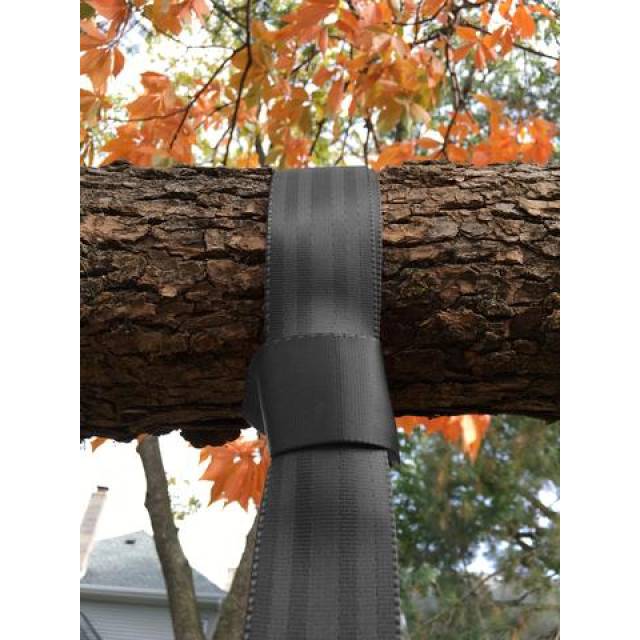
Where there is an exposed beam, a verandah rafter or a tree, tree straps are the quickest hanging method and leave no fixings behind. Each strap is 120cm long and 4cm wide, rated to 200kg, and comes with a basic swivel and a carabiner. You pass the strap over the branch or beam, feed the end through its own loop so it locks tight, and clip the swing to the carabiner.
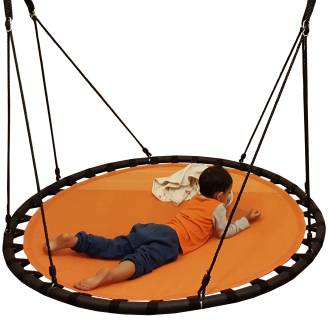
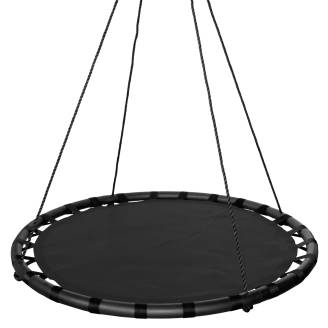
The swing manuals ask for a limb at least 25cm thick. Under a tree, rake the ground and keep loose fill such as wood chips or sand at least 25cm deep, because the surface under a tree swing is usually harder than it looks. Use one strap if you want the swing to spin (the swivel is built in) and two straps to keep a nest or seat swing moving forwards and back. Check the straps for wear at the start of each season.
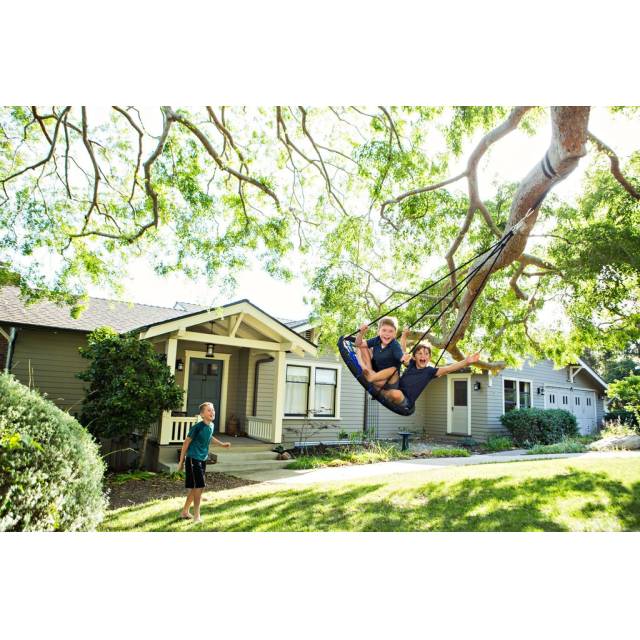
Tree straps also work on a beam indoors, wrapped the same way, as long as the beam is sound and there is room for the strap to sit flat.
Option 3: A Stand, With No Drilling
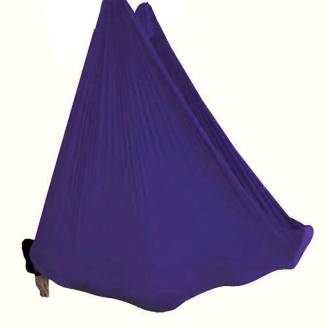
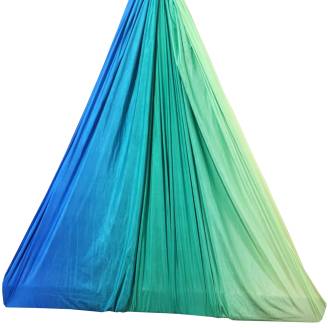
For rented homes, classrooms, clinics and anyone who does not want to install fixtures, a stand replaces the ceiling point. Nothing is fixed to the house and the swing can move between rooms or out to the verandah. Every main swing type is sold bundled with a matched stand, or you can buy the stands on their own. Wrap swings adjust in height because you tie them off at whatever length you like, so they fit on every stand. The four designs suit different swings and different amounts of swinging.
X Stand
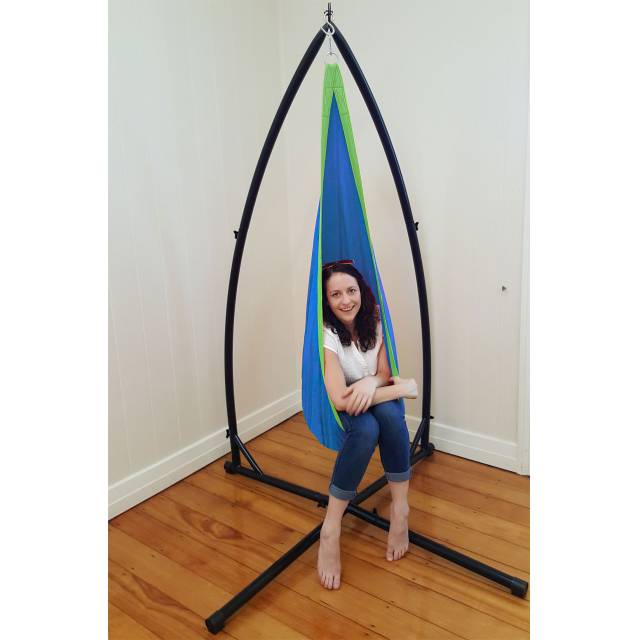
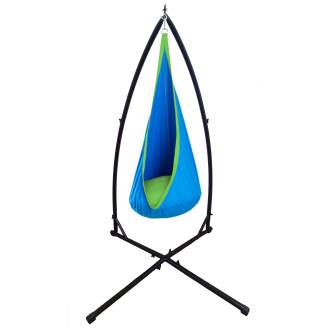
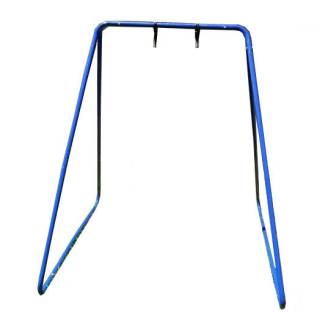
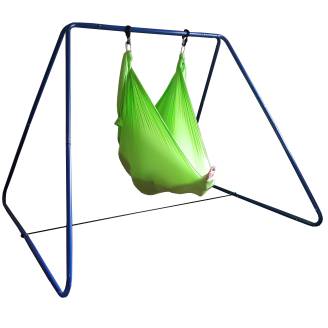
The X-Stand is 2.1m tall on a 1.1m by 1.1m base and rated to 120kg. It is built for sitting and very gentle swinging, so it pairs with the pod chairs, wrap swings hung from a single point and most hammock chairs. It comes with one carabiner at the top; an extra chain and carabiner lets you lower the swing. The small footprint is what makes it convenient indoors, and it is also why the manual rules out strong swinging: a smaller stand footprint generally means easier lifting or tipping if somebody swings too hard. If the legs feel uneven, the feet push in, pull out or turn over to level them.
U Stand
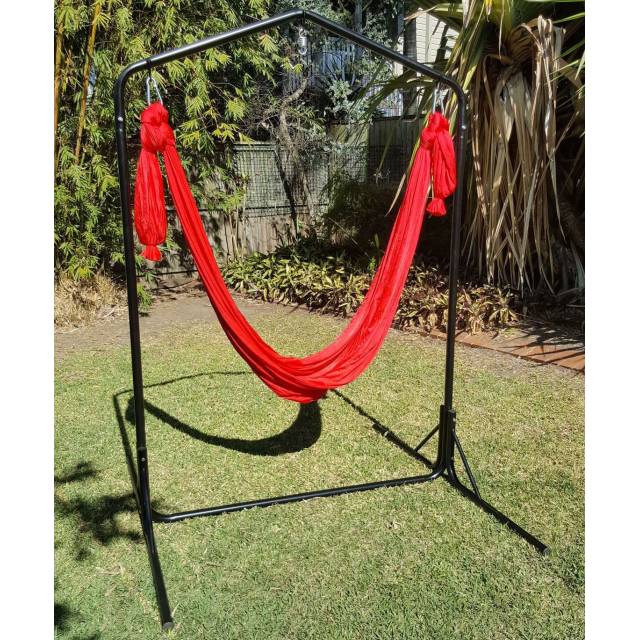
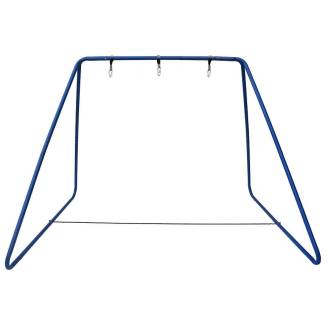
The U-Stand is 2.05m tall on a 1.6m by 1.4m footprint and holds 150kg when sitting, with three hanging points. It is the smallest stand that takes a wrap swing in the open style from two points, and it also hangs a pod, a hammock chair or a 100cm nest swing for very gentle swinging (note in the photos of this combination the small clearance to the side poles). The manual recommends a swivel on the centre point when spinning, so there is less force on the stand, and pegs on grass or matting on a hard floor, because at a certain swinging strength you would notice the legs lifting a little.
Medium and Large Swing Set Stands
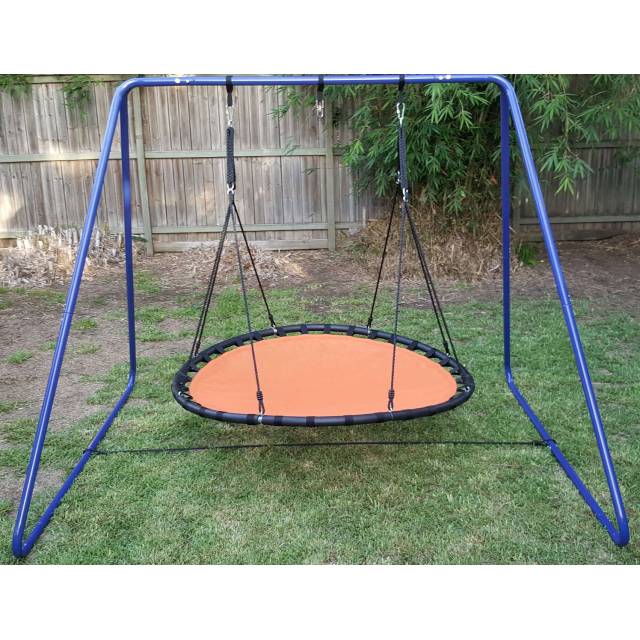
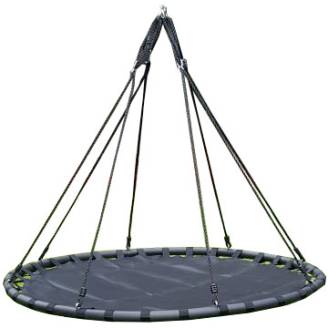
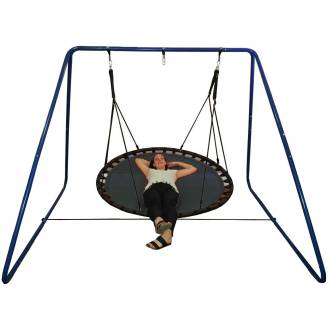
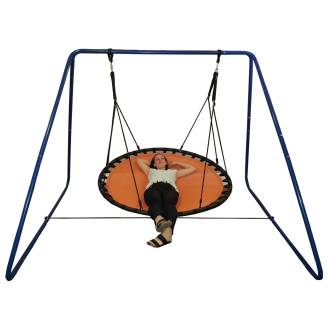
The swing set stands are the ones for real swinging. Both are galvanised, powder coated steel with a suggested capacity of 150kg and a tested capacity of 250kg. The large stand is 185cm tall, 260cm wide and 206cm deep and fits the 150cm nest swings, wrap swings or two smaller swings at once. The medium stand is 190cm tall, 205cm wide and 193cm deep and suits 100cm nest swings and wrap swings. The one fixed height swing that does not fit is the heavy duty commercial rope nest swing, which is too tall.
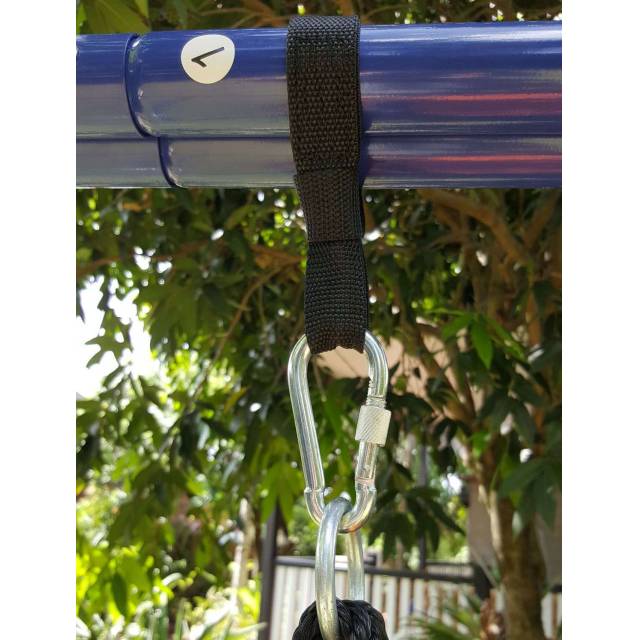
The swings hang from mini straps over the top bar. Each strap must pass above both bars and then through the loop on its own end, which holds it tight against the poles; crossing it any other way rubs the strap. For a single point swing, two mini straps come down to a carabiner, then a swivel, then a carabiner, which spreads the load and gives the smoothest spin. A pod can also go on a swing set stand, using the technique in the manual where the strap passes through the canvas rather than the O ring, which raises the pod about 15cm. Spiral pegs are an optional extra for soft ground. For strong swinging, the stand is best fixed down.
Heavier Duty Tripod Stand
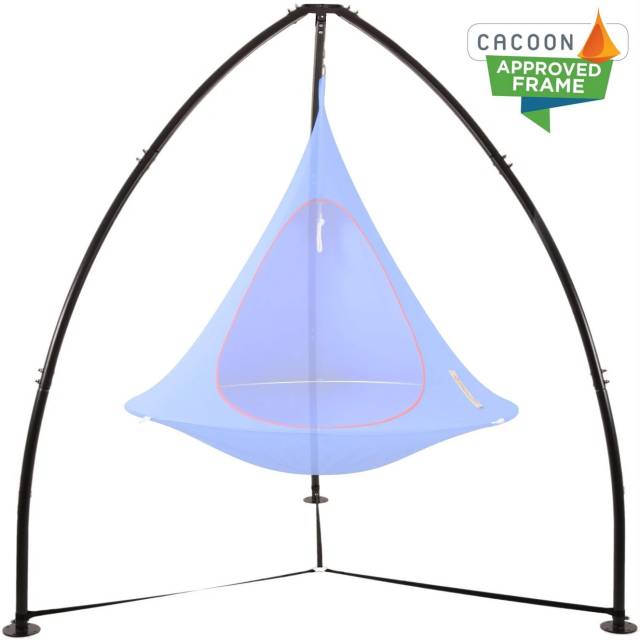
The heavier duty tripod stand is the largest of the stands at 257cm tall with a 2.6x2.6x2.6m base, rated to 204kg and approved for the Cacoons, including the Double. The chain and carabiner let you select the height, so the smaller Bebo fits too, and a lower setting gives more clearance from the poles. It is usually an outdoor stand, with 12 pegs and a tension strap for the legs, but it has flat feet for indoor use. Its purpose is sitting and gentle to moderate swinging, and the larger the Cacoon, the closer it sits to the poles, which limits how hard it can swing.
Setting the Height
Every hanging method above adjusts. On the anchor plate you move the carabiner to a different loop on the strap. On the X-Stand and tripod you clip to a higher or lower link of the chain. On the swing set stands you shorten or lengthen the mini straps, and on a wrap swing you simply tie off the fabric at a different point, with a tight double knot so it cannot slide. Most nest swings have S hooks and rope loops for the same job. Whatever you use, keep to the maximums in the manuals: 35cm for a pod, 40cm for wraps, nests and hangouts, 50cm for the oval seat swing.
Spinning and Swivels
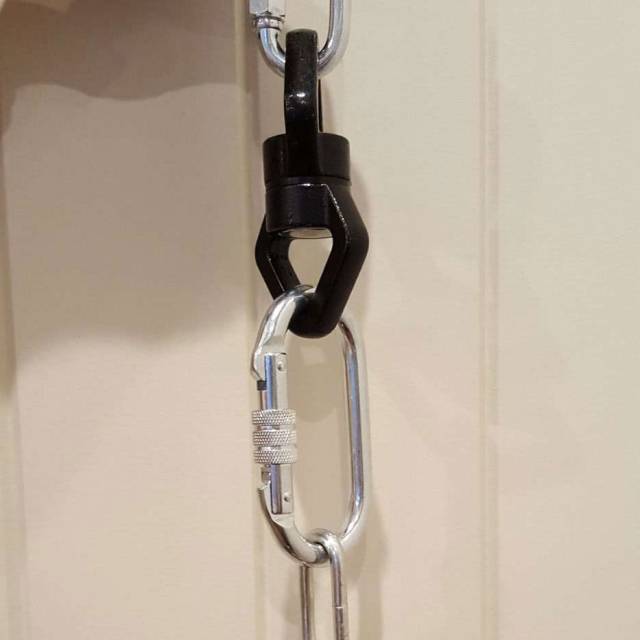
A swing hung from one point can spin; a swing hung from two points moves forwards and back and does not need a swivel. Fitting a swivel when spinning from a single point stops the swing or ropes from winding up, and puts less force on a stand. The tree straps include a basic swivel; the premium swivel is smoother and comes with two large carabiners, and it is our most bought accessory. The hangout manual asks you not to spin a Cacoon excessively, because that twists the hanging accessories and the fabric.
How Much Swinging Each Setup Allows
Some types of swings and stands support more or less swinging. Nest swings support more swinging than the other swings, while pods and wrap swings are for sitting, lying and gentle swinging. Strong swinging belongs on a swing set stand with a wide base, preferably fixed down, or on a strong anchor plate or tree strap setup, not on an X-Stand, U-Stand or tripod, which are for gentler use.
Which Method Suits Which Swing
| Swing | Hanging points | Stands |
|---|---|---|
| Wrap swing | 1 or 2 | Any stand, fully adjustable in height |
| Pod swing | 1 | X-Stand, U-Stand, medium swing set stand or tripod stand |
| Nest swing | 2 (or 1 to spin) | Swing set stand: large for 150cm, medium for 100cm |
| Cacoon or hangout | 1 | Heavier duty tripod stand |
| Seat swings | 2 (swivel swing 1) | Swing set stand or U-Stand |
Before the First Swing
- Double check that every knot, bolt, strap and carabiner is tight, and that screw lock carabiners are closed.
- Have an adult test the setup.
- Check the child can get on and off safely, and supervise. The manuals recommend ages 3 and up.
- Inspect fabric, ropes, straps and hardware at the start of each season, and store swings dry and out of the sun when they are not in use. The stands are powder coated for weather, but give them some cover over long periods outside.
Product pages have links to their respective PDF manuals, which have the assembly steps and diagrams for that swing or stand. See the full range of sensory swings and nest swings, the swings with stands and the stands and mounting hardware.